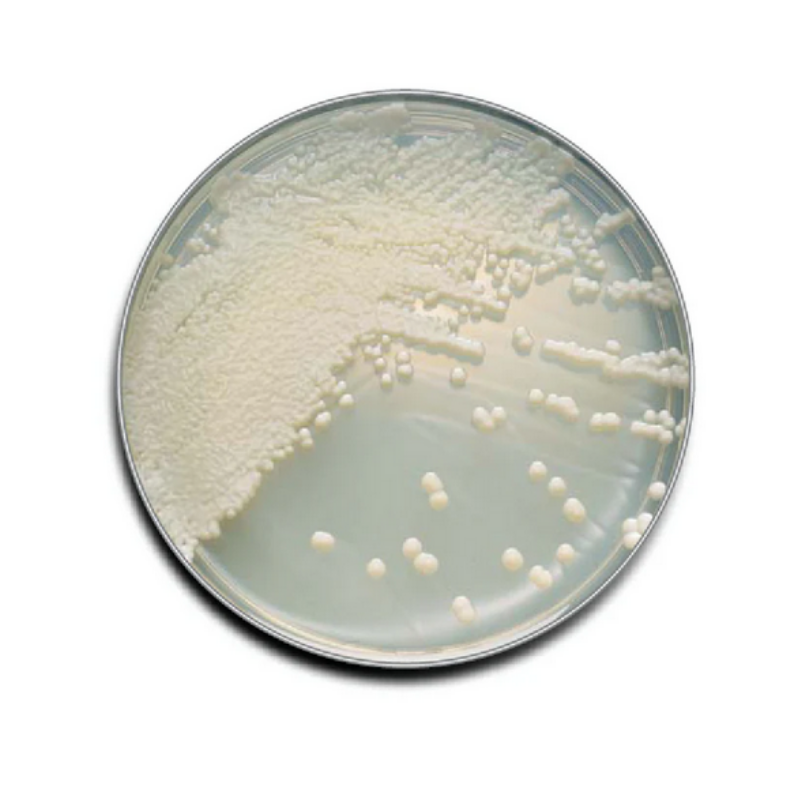
BBL™ Sabouraud Dextrose Agar, Prepared Plate, Deep Fill
$22.00
Secure Encrypted Checkout
Need Help?
Description
BBL™ Sabouraud Dextrose Agar, Prepared Plate, Deep Fill
BBL™ Sabouraud Dextrose Agar (SDA) Prepared Plate, Deep Fill is a ready-to-use, nonselective culture medium designed for the isolation and cultivation of yeasts and molds from clinical and nonclinical specimens. Sabouraud Dextrose Agar is a widely used, general-purpose mycological medium with a slightly acidic pH that supports fungal growth while helping to inhibit many bacteria. The deep fill format provides a thicker layer of agar than standard plates, helping maintain moisture during extended incubation periods that are common for mold recovery and improving usability when multiple colonies or heavier inocula are expected.
Intended use
This medium is intended for culture-based recovery of fungi, including dermatophytes, yeasts (such as Candida spp.), and filamentous fungi. It may be used in clinical mycology workflows, environmental monitoring, and quality control testing where fungal isolation is required. Prepared plates are supplied sterile and are intended for laboratory use by trained personnel following established microbiological procedures.
Key features
- Deep fill plate format to help reduce dehydration and cracking during prolonged incubation.
- Ready-to-use convenience for consistent plate-to-plate performance and reduced preparation time.
- Broad fungal support suitable for common yeasts and molds.
- Acidic formulation traditionally used to favor fungal growth relative to many bacteria.
Principle of the medium
SDA contains nutritive peptones and a high concentration of dextrose (glucose) to support robust fungal growth. The medium’s acidic pH (typically around 5.6 at 25°C) helps discourage the growth of many bacteria, though it is not fully selective. Colony morphology, texture, and pigmentation on SDA can aid in presumptive recognition, and isolated colonies can be used for downstream identification methods (e.g., microscopy, biochemical testing, MALDI-TOF where validated, or molecular assays).
Typical applications
- Primary isolation of yeasts and molds from specimens.
- Subculture and maintenance of fungal isolates for further testing.
- Observation of macroscopic colony characteristics during identification workflows.
- Environmental or industrial monitoring where fungal recovery is required.
Directions for use (summary)
- Bring plates to room temperature before use and inspect for contamination, dehydration, or cracks.
- Inoculate the agar surface using appropriate aseptic technique and streak for isolation.
- Incubate under conditions appropriate for the target organism (commonly 20–30°C for molds; other conditions may be used per laboratory protocol).
- Examine plates periodically; some molds may require extended incubation.
Limitations
- SDA is not fully selective; bacterial breakthrough may occur, especially with heavily contaminated specimens.
- Some fungi may require specialized media or incubation conditions for optimal recovery.
- Colony appearance is not definitive identification; confirmatory testing is recommended.
Storage and handling
Store prepared plates refrigerated as directed by the manufacturer and protect from dehydration, excessive heat, and light. Do not use plates beyond the labeled expiration date. Allow plates to equilibrate to room temperature before inoculation to minimize condensation.
Product specifications
| Attribute | Description |
|---|---|
| Format | Prepared agar plate, deep fill |
| Medium | Sabouraud Dextrose Agar (SDA) |
| Primary use | Isolation and cultivation of fungi (yeasts and molds) |
| Typical pH | ~5.6 (formulation-dependent; refer to labeling) |
| Laboratory setting | Clinical, industrial, and environmental microbiology |


